
Transform Your Grades, Transform Your Future

Expert Online Tutoring That Matches Your Curriculum, State Board, and One-on-One Support for K-12 Students

Explore articles on exam prep, time-management hacks, study resources, and global curriculum updates. .
Whether it’s O/A Levels, State Boards, or International exams, our blog keeps you ready and informed.

A smiling Year 5 student achieving top grades during NAPLAN preparation, supported by online tutoring NAPLAN Australia designed to help struggling Year 5 students build confidence through NAPLAN practice tests and focused Year 5 NAPLAN study sessions.
Uncategorized
WebGrade Tutors

How to Build Confidence in Year 5 NAPLAN With WebGrade Tutors

How to Build Confidence in Year 5 NAPLAN Student: 7 Essential Steps It’s a sunny afternoon, and your Year 5 NAPLAN child comes home from school looking worried. They mention NAPLAN is coming up, and suddenly, the room feels a bit tense. I know that feeling all too well from my time helping families just like yours. Building confidence in Year 5  NAPLAN can seem tricky, but it doesn’t have to be. This guide shares simple, proven ways to help your child feel ready and strong. We’ll cover everything from spotting anxiety early to celebrating small wins. By the end, you’ll have tools to make NAPLAN a positive step, not a scary one. Let’s dive in and turn those worries into wins. For a quick start, try this easy exercise: Have your child list three things they’re good at in school. It takes just five minutes and kicks off building confidence in Year 5  NAPLAN right away. Understanding Anxiety in Year 5 NAPLAN Students Many kids in Year 5 start feeling the pressure of NAPLAN tests. It’s normal, but if left unchecked, it can make learning harder. Signs like avoiding homework or saying “I can’t do this” are common. In my experience, these come from fear of not doing well. One parent shared, “My son used to love reading, but NAPLAN talks made him freeze up.” That’s why spotting these early helps. Building confidence in Year 5  NAPLAN means addressing the root causes, such as comparing oneself to friends or past low scores. With the right support, such as tutoring for struggling Year 5 students, children can shift from doubt to determination. Remember, NAPLAN is about growth, not perfection. Building Strong Foundations to Boost Confidence Before NAPLAN To build confidence in Year 5  NAPLAN, start with the basics in literacy and numeracy. Set up daily routines, like 15 minutes of reading fun stories or simple math puzzles. This creates a safe space for practice without overwhelm. Here’s what I discovered: Consistency turns small efforts into big gains. For example, use free online tools to make it engaging. One statistic shows that kids who practice regularly score 15% higher on confidence surveys before tests. Building confidence in Year 5 NAPLAN isn’t about cramming—it’s about steady steps. Try this challenge: Pick a numeracy game, like adding up shopping items at home, for 10 minutes a day. It links school to real life and reduces NAPLAN stress in Year 5. Differentiating Learning Styles for Year 5 NAPLAN Success Every child learns differently, so tailor approaches to build confidence in Year 5  NAPLAN. Visual learners might love colorful charts for spelling, while hands-on kids thrive with building blocks for math. Take Sarah, a Year 5 student we helped at WebGrade Tutors. She struggled with writing until we used story maps—her scores jumped, and so did her smile. Steps include: First, observe how your child studies best. Second, adapt NAPLAN prep, like using videos for numeracy. Third, mix in tutoring for struggling Year 5 NAPLAN students if needed. This personalization makes learning fun and effective, helping reduce NAPLAN stress in Year 5. Applying Real-World Applications to Build Year 5 NAPLAN Confidence Link school skills to everyday life to build confidence in Year 5 before NAPLAN. For numeracy, turn grocery shopping into a budgeting game—ask your child to calculate totals. In literacy, read recipes together and discuss steps. This shows NAPLAN isn’t just tests; it’s useful stuff. One success story is from Tim, who hated math until we connected it to his love for sports scores. Now, he’s excited for NAPLAN. NAPLAN confidence tips for parents include making these links weekly. It reduces stress in Year 5 NAPLAN by showing relevance. Try this exercise: Plan a family outing and have your child map the route—great for reading comprehension. Tracking Progress and Celebrating Wins in NAPLAN Prep Keep tabs on growth to build confidence in Year 5 NAPLAN. Use simple journals to note weekly improvements, like faster reading or fewer math mistakes. Steps: Set small goals, track with stickers, and review together. Celebrate with fun rewards, like extra playtime. This builds momentum and offers NAPLAN confidence tips for parents. Tutoring for struggling Year 5 students can provide expert tracking tools. In my experience, kids light up when they see progress. It all helps reduce NAPLAN stress in Year 5. Quick Tip: Start with Short Practice Sessions Fact: 70% of Year 5 Students Report Reduced Stress with Routines Variation: Enhancing Self-Esteem for  Year 5 NAPLAN Exams Discover WebGrade Tutors’ Approach to Year 5 Confidence Building At WebGrade Tutors, we focus on personalized plans to build confidence in Year 5 before NAPLAN. Our experts match tutors to your child’s needs, blending fun games with targeted practice. Unlike general online tutoring, we offer one-on-one sessions that adapt in real time. This means quicker wins for struggling kids. Building on Year 5 NAPLAN preparation, we include emotional support too. Here’s what I discovered: Our approach cuts anxiety by focusing on strengths first. Join us to see the difference. Empowering Parents to Support Confidence in Year 5 NAPLAN Parents play a key role in building confidence in Year 5 NAPLAN. Start with open talks about feelings—ask, “What worries you most?” Then, team up on routines. NAPLAN confidence tips for parents: Praise efforts, not just results. For tutoring for struggling Year 5 students, involve yourself in sessions. One parent quote: “WebGrade Tutors made me feel like a partner in my daughter’s success.” This empowers everyone and helps reduce NAPLAN stress in Year 5. Secure Year 5 NAPLAN Confidence Today We’ve covered ways to build confidence in Year 5 before NAPLAN, from foundations to parent tips. Remember, small steps lead to big changes. With Year 5 NAPLAN preparation and the right support, your child can thrive. Ready to see the difference? Book a free 60-minute, no-obligation trial lesson with a WebGrade Tutors expert today and help your child excel in build confidence NAPLAN year 5. Tutoring Made Simple Frequently Asked Question? What Is


Students preparing for NAPLAN with WebGrade Tutors — focusing on NAPLAN preparation, NAPLAN results review, and practice tests.
Uncategorized
WebGrade Tutors

10 Simple NAPLAN Preparation Study Habits With WebGrade Tutors

10 Simple NAPLAN Preparation Study Habits for Busy Families NAPLAN preparation doesn’t have to take over your life. Between school runs, dinner time, and after-school activities, finding study moments can feel impossible — but small, consistent habits make the biggest difference. At WebGrade Tutors, we’ve worked with hundreds of busy families who discovered that simple NAPLAN tutoring strategies done in short bursts are more effective than long study sessions. Let’s explore 10 practical habits that help your child feel confident and calm for NAPLAN Preparation — without the stress. 1. Set a 10-Minute “Learning Window” Even ten focused minutes daily builds lasting progress.Create a short, distraction-free “learning window” where your child reviews reading, writing, or maths skills. Try this: use a timer and end with praise, not correction. 2. Turn Everyday Moments into NAPLAN Preparation NAPLAN tutoring doesn’t always mean textbooks. Turn ordinary moments — cooking, grocery shopping, or driving — into literacy and numeracy lessons. Ask math questions while shopping (“If apples cost $3 each, what’s 3 × 3?”). Practice reading aloud from signs or menus. These small tasks reinforce NAPLAN practice skills naturally. 3. Use Short NAPLAN Practice Tests Weekly Instead of long, overwhelming tests, break practice into bite-sized sessions.A 15-minute reading passage or a quick maths quiz can help your child adjust to the NAPLAN Preparation question style and online format. Pro tip: Review mistakes together — focus on learning, not perfection. Resource: NAPLAN Practice Tests – ACARA 4. Build Confidence with Positive Feedback Confidence is the foundation of NAPLAN success. Children who believe in their ability perform better. At WebGrade Tutors, we’ve seen how simple encouragement like “You worked hard on that question!” can boost performance far more than constant correction. Parent Quote: “Once I stopped focusing on marks and started celebrating effort, my son’s attitude toward NAPLAN Preparation changed completely.” 5. Schedule Family Study Time Learning together builds consistency. Dedicate one or two evenings weekly for quiet study — even if you’re all working on different things. When kids see parents reading or writing too, it normalizes learning and focus. 6. Focus on One Skill Each Week NAPLAN covers four areas: reading, writing, language conventions, and maths.Instead of switching daily, focus on one area per week. Example plan: Week 1: Reading comprehension Week 2: Writing and spelling Week 3: Grammar and punctuation Week 4: Maths problem-solving This keeps study time simple and goal-oriented. 7. Make Study Fun with Games Learning through play helps children retain information better.Try online quizzes, word puzzles, or short math games that align with NAPLAN tutoring goals. Quick Challenge:Play “Find the Synonym” — say a word, and your child lists similar words in 10 seconds. External Resource: ABC Education Games 8. Talk About NAPLAN Openly Kids often mirror their parents’ attitudes toward tests.Keep discussions positive and realistic — explain that NAPLAN Preparation simply helps teachers understand where to focus. Avoid using results for comparison; instead, frame it as “your personal progress chart.” 9. Review NAPLAN Results Together When NAPLAN results arrive, sit with your child and explore what they show.Look at strengths, then gently discuss one or two areas for growth. In my experience, turning results into a plan (not a verdict) helps students feel empowered and motivated. Resource: NAPLAN Results Explained – ACARA 10. Get Support from Expert Tutors Sometimes, families simply need structure.Personalised NAPLAN tutoring gives students tailored practice, expert feedback, and confidence. At WebGrade Tutors, we align lessons with the ACARA NAPLAN proficiency standards, ensuring your child builds core literacy and numeracy skills while learning to think critically. Try This At Home Here are three quick exercises families love:1️⃣ 10-minute reading challenge: Pick a short article and summarise it in one sentence.2️⃣ Fast facts game: Solve 10 maths questions in 5 minutes.3️⃣ Story spark: Write one paragraph about something funny that happened today. These reinforce core NAPLAN skills naturally. Quick Success Story When we began tutoring Liam, a Year 7 student, he struggled with reading speed and maths confidence.After six weeks of short, structured sessions, his NAPLAN practice test scores improved by 22%, and he told his tutor: “I finally feel ready — not scared.” That’s the real measure of success. For Parents Who Feel Overwhelmed You don’t have to manage NAPLAN prep alone.Even 10–15 minutes of focused effort each day can make a difference.And if you’d rather have expert support, our free 60-minute trial can help you see where your child stands and how to move forward. Micro tips for stress-free study Use a quiet space — no phones or TV. Keep lessons under 20 minutes for young learners. Always finish on a success note. How WebGrade Tutors Can Help Our NAPLAN tutoring focuses on confidence-building, tailored practice tests, and personal growth — not just marks.We make NAPLAN preparation practical and stress-free for busy families. Ready to see the difference?Book a free 60-minute, no-obligation trial lesson with a WebGrade Tutors expert today and help your child excel in NAPLAN tutoring and preparation. Tutoring Made Simple Frequently Asked Question? What’s the best way to NAPLAN Preparation at home? Focus on short daily habits like reading, writing, and maths review. Combine NAPLAN Preparation practice tests with positive reinforcement. How early should we start NAPLAN tutoring? Ideally 2–3 months before the test, giving enough time to identify and strengthen weak areas. Are online NAPLAN practice tests effective? Yes! Adaptive tests mirror real conditions and help students become familiar with timing and question formats. What if my child feels anxious about NAPLAN Preparation? Keep conversations calm. Remind them that NAPLAN measures progress, not potential. Consider confidence-focused tutoring if anxiety continues. How do NAPLAN results help parents? They show areas for improvement and guide long-term learning goals — especially when combined with consistent tutoring.

Uncategorized
WebGrade Tutors

NAPLAN Tutoring: 7 Key Insights for Students & Schools

NAPLAN Tutoring: 7 Key Insights for Students & Schools What Is NAPLAN Tutoring and Why It Matters Every year, thousands of Australian students in Years 3, 5, 7, and 9 sit for NAPLAN, the National Assessment Program for Literacy and Numeracy.While it’s a national test, it often feels deeply personal — both for parents and students. Many families turn to NAPLAN tutoring to reduce stress, build skills, and help children perform with confidence. At WebGrade Tutors, we’ve seen firsthand how the right preparation transforms anxiety into achievement. In this post, you’ll discover why NAPLAN exists, what it measures, and how to help your child approach it with calm and confidence. Why Is NAPLAN Tutoring Needed? NAPLAN provides a national snapshot of how students are performing in key skill areas: reading, writing, language conventions, and numeracy.The tests are designed by ACARA (Australian Curriculum, Assessment and Reporting Authority) and administered across all states. For parents, NAPLAN results can feel overwhelming — numbers, scales, and proficiency bands. Yet behind every score is a child’s real progress story.NAPLAN tutoring helps interpret these results and turn them into meaningful learning goals. Statistic: In 2024, ACARA reported that students who engaged in targeted literacy and numeracy support after NAPLAN showed a 16% improvement in next-year assessments. Common NAPLAN Challenges for Students Test anxiety — unfamiliar formats or time limits. Skill gaps — especially in spelling and problem-solving. Low confidence — fear of comparison or poor performance. NAPLAN online/adaptive testing Since 2023, most students sit NAPLAN online, where questions adapt to ability levels. That means tutoring should mirror this style — focusing on flexible thinking, not rote answers. How NAPLAN Tutoring Supports Literacy and Numeracy Growth In my experience as an educator, tutoring that’s aligned with NAPLAN standards builds long-term literacy and numeracy skills, not just test-day success. A tailored tutoring program reinforces foundational understanding: In reading, students learn to interpret meaning, tone, and structure. In writing, they practise persuasive and narrative styles. In numeracy, they develop critical reasoning beyond equations. Parent Quote: “Before tutoring, my daughter dreaded maths. After 6 weeks of NAPLAN prep with WebGrade Tutors, she not only improved her results but started saying, ‘Maths is fun now!’” – Lisa M., parent of Year 5 student How to Prepare for NAPLAN at Home Start with short, calm practice sessions using official NAPLAN practice tests. Focus on one subject per week to avoid burnout. Discuss mistakes as learning opportunities, not failures. Literacy and numeracy skills Tip: Try reading short articles aloud together, then summarise the main idea. For numeracy, play 10-minute games like “Math Bingo” or “Estimation Station” at dinner. The Positive Impacts of NAPLAN Tutoring Although NAPLAN is sometimes seen as “high-stakes,” when approached the right way, it offers real benefits.NAPLAN tutoring helps teachers and parents understand each child’s strengths and learning needs. Benefits include: Improved confidence before formal testing Clearer understanding of literacy and numeracy expectations Better communication between parents, teachers, and students Test anxiety and student wellbeing Research by the University of Melbourne (2023) found that students receiving emotional support and structured tutoring reported 30% lower stress levels before NAPLAN. A Real-World Example — Restoring Confidence One Year 7 student came to WebGrade Tutors scoring below national average in writing. Through 8 weeks of structured NAPLAN tutoring, focusing on sentence clarity and grammar, she lifted her result to “Above Standard.” Her teacher later noted, “She’s writing with purpose now — not just for the test.” How Teachers and Parents Use NAPLAN Results When results arrive between August and September, they show more than a score — they map progress across national proficiency standards. Tutors and teachers can: Identify if a child is meeting or exceeding expectations. Plan specific learning interventions. Track growth over time using a diagnostic assessment and progress tracker. Parents can review results on the MySchool website for context. ACARA NAPLAN proficiency standards The updated standards focus less on rankings and more on student development, encouraging support programs rather than competition. What to Do After Receiving NAPLAN Results Review results with your child calmly — highlight their effort. Celebrate strengths before discussing areas for growth. Set realistic learning goals together with their tutor. Exercise: Choose one weak area (e.g., fractions) and practise through a free NAPLAN numeracy game. Make it fun! The WebGrade Tutors Approach to NAPLAN Tutoring At WebGrade Tutors, we believe NAPLAN should be an opportunity, not an obstacle.Our NAPLAN tutoring sessions blend curriculum alignment with motivational teaching to ensure every child feels capable and confident. We focus on: Diagnostic assessments for precision Personalised study plans Regular feedback loops for parents Emotional support to manage stress Tailored tutoring program Each program adapts to your child’s goals — from Year 3 beginners to Year 9 advanced learners — ensuring steady progress and lasting confidence. How WebGrade Tutors Prepares Students Step-by-Step Initial consultation — identify strengths and goals. Personalised NAPLAN practice tests to benchmark skills. Interactive learning sessions (reading, writing, maths). Confidence-building strategies for test day. Feedback report tracking literacy and numeracy gains. Parent Support During NAPLAN Season Parents play a vital role in a child’s test journey.The best thing you can do is keep conversations positive. When you model calm and confidence, your child follows. Try these ideas: Avoid comparing your child’s results with others. Remind them NAPLAN shows one day’s performance, not their worth. Keep routines consistent — rest, nutrition, and play matter. Exercise: Each night, ask, “What’s one thing you learned today?” This builds self-awareness and reduces anxiety. MySchool website data Understanding school data on MySchool can help parents make informed tutoring decisions. What NAPLAN Does for the School System NAPLAN results help the government refine curriculum priorities, allocate resources, and support schools in need.They’re a diagnostic tool — not a label — guiding national improvement in literacy and numeracy. Conclusion NAPLAN isn’t just about scores. It’s about helping children grow into confident, capable learners.With the right NAPLAN tutoring, your child can transform testing into progress and anxiety into achievement. Ready to see the difference?Book a

Online tutoring quality assurance by WebGrade Tutors expert during live session with laptop and mic, ensuring personalized learning and student progress.
Uncategorized
WebGrade Tutors

How WebGrade Tutors Ensures Online Tutoring Quality Every Week

How WebGrade Tutors Ensures Online Tutoring Quality Assurance Every Week Every week at WebGrade Tutors, we deliver hundreds—and sometimes thousands—of private one-to-one and small-group lessons. With 1,450 tutors, content mapped across every state curriculum, and over 17,000 students with unique needs, we understand the magnitude of the task. That’s why online tutoring quality assurance isn’t just a phrase—it’s our promise. I’ve seen firsthand how a single session flagged early can save time, build confidence, and guarantee results. Why Quality Can Vary in Online Tutoring and How We Address It Many families assume that online tutoring is “just like in-person” but more convenient. The reality: without tutoring session monitoring systems, things like engagement drop-off, inconsistent tutor standards or missed student signals can creep in. Research shows tutoring programs that lack formal monitoring struggle with consistency. National Student Support Accelerator+2londontutoringonline.com+2 At WebGrade Tutors we recognised these risks early—and built our process accordingly. How We Capture Every Interaction via Data and Whiteboard Tools Step one in our process is capturing the “raw” session data. Every interaction—on our digital whiteboard—every drawn shape, shared note, question asked, answer given—is logged. That means detailed recorded tutoring sessions that feed into our learning analytics system. Parents often tell us: “It feels like you were in the room.” Because, in effect, we are.(Exercise: After your child’s next session, ask them to screenshot one whiteboard page and reflect: did they ask more questions than the tutor?). How Online Tutoring Quality Assurance Works in Real-Time Here’s the heart of our engine: our system of online tutoring quality assurance is powered by AI alerts and human deep dives. The data flows into our “WebGrade Data Hub” and we set triggers for unusual patterns: e.g., a student repeatedly gets wrong answers, or a task takes significantly longer. If a trigger fires, the session is flagged for replay by our QA team. We watch the conversation, tutor methods, engagement levels. This is our tutor lesson observation stage. Third-party research supports this kind of monitoring as improving outcomes. Learning Analytics+1 Then we feed back: the tutor receives notes, adjusts lesson style, tries new strategies—and the next session is compared. This loop is our core mechanism of tutor quality checks.A fact: We track over 50,000 data points per week across all sessions. How We Personalise Based on Session Data and Tutor Feedback One size never fits all. Because we have robust session-level data, we tailor each student’s path. If a student consistently takes longer on visual-spatial whiteboard tasks, we direct the tutor to adjust: more visuals, more scaffolding. If we detect low confidence via engagement metrics, we add extra check questions. That’s what makes the tutor feedback loop meaningful—not just generic adjustments.(Challenge: Have your child track which type of question gave them most trouble this week—visual, textual, or problem-solving—and share that with the tutor.) What This Looks Like in a Typical Week of Hundreds of Sessions Imagine this: Jane (Year 8) had three sessions this week. Session 1: Logged with high correct rate but low engagement (19 % unanswered questions). An AI alert triggered and our QA team replayed it. They noticed the tutor used a single strategy repeatedly, Jane lost focus at minute 22. Session 2: Tutor used two new strategies, we captured student whiteboard interactions. Session 3: Jane’s engagement rose to 87 %, correct rate improved by 12 %.A parent quote: “I could literally see the difference in her attitude and the whiteboard snapshots made it so clear.”Statistic: According to the Stanford “Tutoring Quality Standards” project, tutoring programs that monitor student progress and tutor performance show significantly better results. National Student Support AcceleratorBy applying our system of learning analytics for tutoring, we replicate this every week across all students. How We Measure Tutoring Success and Maintain High Standards We don’t just assume improvement; we track it. Our key metrics include: session length, task completion time, correct vs incorrect responses, engagement score, and tutor improvement rate. Research shows data-driven tutor review systems produce better outcomes. wise.live+1For example, if a tutor’s classes show persistent low completion rates, we initiate a tutor performance review and set up mentor support. For students, we send a progress report each month—parents can see the difference.(Exercise: Download our “Session Metrics Snapshot” sheet and review your child’s scores every month.) WebGrade Tutors Solution: Our End-to-End Quality Assurance Process Explained Here’s how WebGrade Tutors puts all this into action. Onboarding tutors: We vet, train and certify over 1,450 educators using our QA standards. Mapping content: Every curriculum is aligned with each state’s standards for accuracy and relevance. Running sessions: Thousands weekly, via a digital platform with full whiteboard logging. QA cycle: Data capture → AI alerts → session replay → tutor feedback → improved next session.This is our core promise of online tutoring quality assurance. And because we provide session replay tutoring, along with tutor quality checks, you and your child are never in the dark about what happens in the lesson. How You Can Help Maximise the Value of High-Quality Tutoring You play a critical role too. Here’s how parents can support and amplify the benefit of all our QA work: Request the monthly report and review it together with your child—ask: “What surprised you?” Use the 10-minute post-session check-in: ask “What did you draw on the whiteboard?” Keep the learning space consistent at home and treat each session as “school time”. That supports our safeguarding online lessons commitment. Ask the tutor for next-step suggestions and revisit them by the next session.When parents stay engaged, student confidence rises and outcomes improve. Conclusion Join Us in Delivering Exceptional Tutoring Quality Every Week At WebGrade Tutors, we believe every session deserves the highest standard—no exceptions. With our “in-the-room every session” approach, you can trust that your child’s tutoring is backed by real data, intelligent review and continuous improvement.Ready to see the difference? Book a free 60-minute, no-obligation trial lesson with a WebGrade Tutors expert today and help your child excel in online tutoring quality assurance. Tutoring Made Simple Frequently Asked Question? What

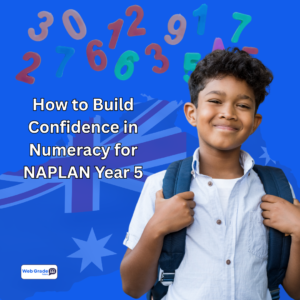
NAPLAN Year 5 Numeracy student practising numeracy for NAPLAN preparation with online NAPLAN tutoring support — confident child learning maths with tips for parents and improving school results.
Uncategorized
WebGrade Tutors

How to Build Confidence in Numeracy for NAPLAN Year 5 With WebGrade Tutors

How to Build Confidence in Numeracy for NAPLAN Year 5 The day is approaching about NAPLAN Year 5 Numeracy: your Year 5 child will soon take the numeracy component of the NAPLAN (National Assessment Program – Literacy and Numeracy). It may feel like a big moment, but when we frame “NAPLAN preparation” not as a hurdle but as a chance to build confidence in numeracy, the outlook changes. Imagine your child closing their test booklet and saying: “I knew what to do. I felt confident. I found the answer.” That sense of competence matters. Because numeracy isn’t just about performing for a test—it’s about building skills, reasoning, and a mindset that carries into life. For students in Year 5, the numeracy test assesses key skills such as number operations, measurement, geometry and data interpretation. Good to Great Schools Australia+1 At WebGrade Tutors, we believe confidence is built—not given. Over the next sections, we’ll work through what the numeracy test looks like, why confidence matters, and practical steps you (as parent or tutor) can take with your child to build strong numeracy skills, reduce anxiety, and make the preparation journey positive and empowering. Understanding the Numeracy Domain – What NAPLAN Year 5 Numeracy Tests In Year 5, the NAPLAN numeracy test aligns with the Australian Curriculum strands of Number & Algebra, Measurement & Geometry, and Statistics & Probability. doodlelearning.com+1 The types of tasks include word problems involving multiplication or division, working with fractions and decimals, interpreting graphs, calculating area/perimeter, and solving multi-step problems. Good to Great Schools Australia Confidence in numeracy means your child feels comfortable approaching problems, asking “what do I know?”, “What do I need to find?”, and “What strategy will I use?” The test is as much about reasoning as about calculation. When a child feels unsure of themselves, time slows, and mistakes creep in. That’s why effective NAPLAN preparation must include emotional readiness, skill mastery, and familiarity with the test format. Step 1 – Familiarise with the Test Format and Question Types Knowing what to expect reduces uncertainty and builds confidence. According to preparation guides, students benefit from reviewing past papers, familiarising themselves with online/digital test formats, and practising under timed conditions. Cluey Learning+1 Try this 10-minute activity:Ask your child to complete five sample numeracy questions from a Year 5 NAPLAN-style test (for example one from number operations, one from measurement, one from data interpretation). Time them for 5 minutes. Then review together: what did they find easy? Which one took the longest? What helped them solve it? What made it tricky? Doing this weekly fosters familiarity and builds competence. When the real test comes, the form (rather than only the content) will feel known and manageable. Step 2 – Strengthen Core NAPLAN Year 5 Numeracy Skills through Everyday Practice Skills such as multiplication/division fluency, fraction/decimal understanding, measurement, data, and reasoning are all key. Twinkl+1 The more these skills become automatic, the less mental “space” your child needs to use on basic steps, freeing up focus for reasoning. Here’s how you can help at home: Daily “number talk” – Spend 5 minutes each morning talking through a real-life problem: “If we have 48 apples and put 6 in each box, how many boxes? How many left over?” Measurement and geometry in the real world – When cooking, ask “If the tray is 30 cm by 20 cm what is its area? If we double the length, how does that change the area?” Data interpretation practice – Use a simple bar graph (even from the newspaper or online kids’ news) and ask your child to summarise what the graph shows and infer why. Skill-drills with a twist – Use flash-cards or apps for multiplication/division facts, but follow up with “how could you use that fact in a bigger problem?” This shifts from drill to reasoning. By regular, short bursts of meaningful practice, the basic operations become comfortable—and that builds the foundation of confidence for NAPLAN preparation. Step 3 – Manage Mindset and Build Numeracy Confidence Even if a student is numerically strong, mindset can affect performance. NAPLAN preparation isn’t just about doing lots of worksheets—it’s about building a resilient, positive approach. Guides emphasise that too much pressure can undermine performance, and simple routines, well-being, and parent support matter. Matrix Education Mindset support tips: Celebrate effort, not only correctness. When your child tries a challenging problem—even if they don’t answer perfectly—say: “Great effort! You tried multiple strategies.” Growth-mindset language. Use phrases like “Mistakes help us learn,” “What new strategy will you try next time?” rather than “You must get it right.” Relaxation routine before practice. A short walk, a few deep breaths, or a 2-minute stretch before a numeracy task can reduce anxiety and help concentration. Normalise the test. Explain that the numeracy component of the test is one part of their school program—not a verdict on them. When students feel “this is just one task I’ll do my best,” performance improves. The better the mindset and emotional readiness, the more your child’s NAPLAN Year 5 Numeracy skills will shine under test conditions. Step 4 – Tailor Practice to Learning Style for Maximum Engagement Every child has a preferred way of learning: visual, auditory, kinesthetic, or a mix. Aligning numeracy practice to their style makes it more engaging, and engaged students build confidence faster. Visual learners: Use colour-coded number lines, draw diagrams of measurement/area problems, or use mind-maps of “problem-solving steps” (e.g., Understand → Plan → Solve → Check). Auditory learners: Speak through maths problems aloud together or ask your child to explain their solution step by step verbally. You could record them explaining, then replay and ask “Where did you pause or hesitate?” Kinesthetic learners: Use physical objects: dice, blocks, cubes, timers for division drills, scale models for area/perimeter. Pose a real-life challenge: “Build a rectangle with area 24 cm². What are the dimensions?” Let them manipulate tiles or blocks. Combination learners: Alternate mode each practice day to keep things fresh—and track which mode your child responds

NAPLAN preparation and tutoring for NAPLAN Year 5 students building reading confidence — WebGrade Tutors supports parents with NAPLAN tips and helps improve NAPLAN school results.”
Uncategorized
WebGrade Tutors

NAPLAN Year 5 Reading Boost Confidence & Skills

How to Build Confidence in Reading for NAPLAN Year 5 Every year, thousands of NAPLAN Year 5 students across Australia sit the NAPLAN Year 5 tests, and reading is one of the key domains. The very term “NAPLAN preparation” might feel heavy — but when we focus on reading with confidence, the story changes.Imagine your child opening a text and saying, “I can understand this. I can find the meaning. I can answer the question.” That shift — from hesitation to confidence — is the heart of what we at WebGrade Tutors aim to help families achieve.In this blog, you’ll learn why reading confidence matters for  NAPLAN Year 5, how you can help your child build it, tailored strategies for their learning style, and how to monitor progress. Whether your child is thriving or finding reading a bit tricky, these ideas will help. Understanding the Reading Domain For NAPLAN Year 5 Students in NAPLAN  Year 5 face reading tasks that expect more than just decoding words. They need to interpret information, link ideas, infer meaning, and evaluate texts. As one parent guide explained: “At Year 5 level … sentence structure may be varied and some unfamiliar vocabulary is included.” Art Of Smart EducationConfidence in reading comes when your child can handle these challenges with less stress — they don’t feel stuck or “out of their depth”. The national body says that the best preparation for NAPLAN Year 5 is ongoing teaching of the curriculum, and that students should be reassured the test is one part of their school program, not the whole story. ACARASo our focus becomes: How can parents and tutors help build that reading confidence before the test day? Step 1: Build Familiarity with the Test Format When a child knows what to expect, anxiety falls and confidence rises. According to prep resources, one of the best ways to build reading confidence for Year 5 NAPLAN is to work through sample questions and texts. Cluey Learning+1Try this 10-minute activity: Pick a past-paper style reading text (e.g., a short narrative or information report). Set a timer for 5 minutes and ask your child to read it. Then ask them: What is the main idea of the text? What two details support that main idea? One question they found tricky and why.Then talk about how the questions were structured: multiple-choice, drag-and-drop (online version), short answer.By the end of a few of these sessions, your child will recognise question types and feel more in control. This is a major element in “NAPLAN preparation” for reading. Step 2: Strengthen Core Reading Skills through Diverse Texts Confidence grows when students practise across different types of text. Year 5 NAPLAN reading includes narrative, informative, persuasive, and biography/autobiography texts. Art Of Smart EducationHere’s how you can help: Read for variety. One day a short story; next day a magazine article; then maybe a procedural text (like “How to bake a cake”) to challenge comprehension of instructions. This variety aligns with the Australian Curriculum and prepares for varied NAPLAN reading tasks. Twinkl Vocabulary power. Keep a “word vault” of unfamiliar words your child comes across in reading. Once a week play “word detective” — list three new words, look up meanings, find them in new sentences together. Question-generation. After reading together, ask your child to write one question they might ask about the text and then answer it. This builds deeper thinking (inferential skills) which reading confidence draws on. Link reading to real life. If you’re reading about an information text on sharks, go online afterwards or look up a short video; ask your child how the article linked to the video. This builds connections and helps comprehension.These techniques make reading an active skill rather than passive, which boosts “reading confidence” for Year 5 NAPLAN preparation. Step 3: Manage Mindset and Emotional Readiness For NAPLAN Year 5 Reading confidence isn’t just about skills—it’s about how your child feels when tackling a text. A recent guide emphasises that “while NAPLAN isn’t a test students can ‘cram’ for, practising literacy … can boost confidence and reduce stress.” Matrix EducationSome practical mindset tips: Celebrate small wins. When your child finishes a text and can summarise it, say: “Great! You got the main idea and two details.” Those wins stack and build confidence. Encourage effort language: “You tried that tricky paragraph and asked questions — good thinking!” rather than “You got it right.” It emphasises process. Create a calm routine. On a practice reading day, begin 2 minutes of deep breathing together, maybe a quick stretch. It helps your child centre themselves before reading. Reframe the test. Remind them the test is a snapshot of skills on the day—not a judgement of intelligence. This helps reduce fear and allows them to focus on doing their best.This psychological side is often under-used in “NAPLAN preparation” but it is key to reading confidence for NAPLAN Year 5. Step 4: Tailor to Learning Style – Make Reading Engaging Every child learns differently. Adapting your approach to suit their style makes reading practice more effective and enjoyable. Visual learners: Use mind-maps or storyboards after reading a text. Your child draws how the text flows or highlights sections of the text in colour. Auditory learners: Encourage reading aloud, pausing after each paragraph to ask: “What just happened? What might happen next?” You might even record their reading and play it back to talk about strengths. Kinesthetic learners: Turn reading into an interactive game: print a short text, cut it into sections, ask your child to arrange them in the correct order, then read them together. Or act out a short narrative.Matching the reading practice to how your child learns best builds engagement—and engagement builds confidence. Step 5: Monitor Progress – Tiny Checks, Big Gains Confidence grows when progress is visible. For Year 5 reading and NAPLAN preparation, tracking can be simple but effective. Use a checklist at home: each week tick off “Read one magazine article”, “Used a new word from word vault”, “Completed

NAPLAN preparation students taking exam in classroom with WebGrade Tutors providing NAPLAN tutoring support
Uncategorized
WebGrade Tutors

NAPLAN Tutoring 2025: Positive Impact on Students and Schools

NAPLAN Preparation 2025 – Purpose, Process, and Impact on Students and Schools Why NAPLAN Preparation Matters for Every Australian Student There’s a moment every Australian parent remembers: the day their child brings home a form, a test schedule, a stack of practice papers. For millions of children in Years 3, 5, 7 and 9, the national test known as the NAPLAN looms on the calendar. I still recall chatting with one Year 5 student who told me, “I feel like everything will change if this test is bad.” That pressure is real. But here’s the thing: NAPLAN preparation isn’t about high-stakes judgment. It’s about giving children the tools and confidence they need to show what they know. It’s about helping teachers, schools and families find where extra support is needed. According to official data, NAPLAN occurs each year for all students in those grades with reading, writing, language conventions (spelling, grammar, punctuation) and numeracy as domains. acara.edu.au+2nap.edu.au+2 At WebGrade Tutors, we believe that with the right preparation, the test becomes less of a hurdle and more of a stepping stone. This blog will walk you through the purpose of NAPLAN, how it works, its impact on students and schools—and most importantly—how to support your child so NAPLAN preparation becomes a positive experience. Understanding NAPLAN – The Foundation of Australia’s Educational Benchmark What NAPLAN Measures (Reading, Writing, Language Conventions, Numeracy) The NAPLAN tests assess four core domains: reading, writing, language conventions (which include spelling, grammar, and punctuation), and numeracy (i.e., maths skills). nap.edu.au Each domain provides a snapshot of a child’s proficiency in foundational academic skills—skills educators agree are critical for success in further schooling and life. nap.edu.au+1 Who Oversees NAPLAN (ACARA, Test Administration Authorities) The test is managed by the Australian Curriculum, Assessment and Reporting Authority (ACARA), working in conjunction with Test Administration Authorities (TAAs) in each Australian state or territory. acara.edu.au+1 This means the test content and reporting is nationally consistent but locally administered—so rooms, devices, and scheduling may differ slightly from school to school. Micro-Tip: “NAPLAN online testing system explained” With NAPLAN now largely conducted online, familiarising your child with the format—drag-and-drop, multiple-choice, and short-answer questions—can make a significant difference. Consider trying a demo site together to reduce surprise on test day. vcaa.vic.edu.au+1 What you’ll learn in this section:You’ll gain a clear understanding of exactly what NAPLAN is measuring, how it’s managed, and why knowing the format is a key part of effective NAPLAN preparation. The Purpose Behind NAPLAN – Why It Exists and How It Shapes Learning Ensuring Fairness, Transparency, and Accountability in Schools One of the primary purposes of NAPLAN is to give parents, teachers, and policymakers a consistent means to see how students are progressing against national standards. Department of Education+1 For parents, it’s a window into how their child’s skills compare nationally—not just locally. For schools, it brings transparency and accountability. How NAPLAN Data Drives Policy and Curriculum Decisions Beyond each child’s result, NAPLAN data provides insight into how schools or systems may need support. For example, are there too many students in a school falling below proficiency? Where should funding or tutoring programs be targeted? nap.edu.au+1 This is where NAPLAN preparation ties into larger educational efforts. Micro-Tip: “NAPLAN data insights for improving education” Ask your child’s school what they do with NAPLAN results: how they interpret learning gaps and adjust teaching. This kind of transparency builds trust and helps you plan at home how you can complement school efforts. What you’ll learn in this section:You’ll understand the “why” behind NAPLAN—why it matters for your child, for the school, and for the broader Australian educational system. With this understanding, you can talk with your child in a way that frames the test as part of a larger learning journey—not a one-time “pass/fail” event. The Impact of NAPLAN – Positive and Negative Effects on Students and Schools Common Student Reactions: Stress, Pressure and Anxiety It’s no surprise that many children feel worried around testing time. Research shows that NAPLAN can lead to anxiety, restlessness or sleep issues. Macquarie Health Collective+1 One parent wrote: “My daughter couldn’t sleep thinking about the test – she felt all her worth was going into that one week.”This is a reminder: NAPLAN preparation must include emotional support, not just academic drills. The Positive Side: Accountability, Feedback, and Growth On the flip side, the test gives teachers concrete information about how students are performing so they can intervene where needed. Department of Education+1 Schools can then tailor help, and families can better focus on the exact skills that need attention.At the school level, NAPLAN results—and their publication—encourage investment in better teaching and resources. Micro-Tip: “NAPLAN and student wellbeing strategies” Set aside 10 minutes each day in the lead-up to NAPLAN to chat with your child about how they feel, not just what they’re studying. A calm mindset improves readiness. What you’ll learn in this section:You’ll see both the benefits and potential drawbacks of NAPLAN. With this balanced take, you can help your child approach preparation with clarity and calm—not fear. Effective NAPLAN Preparation Strategies – How Parents Can Help Their Child Succeed Step 1 – Build Familiarity with Practice Tests One of the best ways to reduce test anxiety is familiarisation. Use past-paper style questions or demo online systems so your child knows what to expect. The official site offers such demos. acara.edu.au+1Try this 10-minute activity: Pick a sample numeracy question together; time it for 2 minutes, and then talk about how your child felt. Encourage the “I gave it a go” mindset. Step 2 – Strengthen Core Literacy and Numeracy Skills Focus on the underlying skills: reading comprehension, clear writing, grammar and punctuation, maths reasoning. These aren’t just for the test—they’re skills for life.Mini-challenge: Ask your child to read a short article and underline all the punctuation errors for 5 minutes. Then fix them together. Step 3 – Manage Anxiety and Build Confidence Preparation isn’t just skill-based. Talk about growth: “This is an opportunity to show your progress.” Celebrate

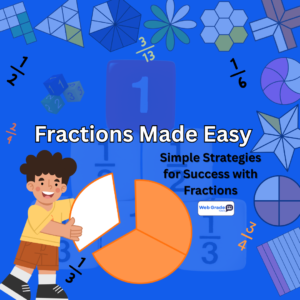
Fractions made easy with WebGrade Tutors — simple strategies for success, tutoring for fractions, and confidence for students
Uncategorized
WebGrade Tutors

Fractions Made Easy – 5 Simple Strategies for Success by WGT

Fractions Made Easy: Simple Strategies for Success with Fractions Fractions made easy—imagine your child looking at a math sheet and finally saying, “I get it!” It starts with that moment when the fraction doesn’t feel like a mystery anymore. If you’re a parent or a student who has ever stared at ¾ + 2/5 and thought “how on earth?”, you’re not alone. Many learners struggle with fractions because they feel abstract, confusing, or unrelated to the real world. In this article you’ll learn clear, simple strategies that make fractions straightforward, practical and even enjoyable. Together, we’ll turn fraction fear into fraction confidence. Understanding the Basics of Fractions Made Easy Before you can master fraction operations, you need to understand what a fraction really is. A fraction represents a part of a whole. Picture a chocolate bar broken into equal pieces—if you take 3 of 8 pieces, that’s 3/8 of the bar. That simple image helps ground the concept. In more formal terms, the numerator (top number) shows how many parts you have; the denominator (bottom number) shows how many equal parts the whole is divided into. Research shows that when students build this foundational understanding, they’re much better prepared to work with fractions later. frax.explorelearning.com+2K12 Tutoring+2 Here’s a quick analogy for Fractions made easy: Think of fractions like slices of pizza. The whole pizza is the “1”, and each slice is a fraction of that pizza. If you’ve got two slices out of eight, you have 2/8—or simplified, 1/4—of the pizza. Step-by-Step Explanation of Key Concepts Concept 1 — Equivalent Fractions and Simplifying Equivalent fractions are different fractions that name the same value (for example, 2/4 = 1/2). A great exercise is to draw a rectangle, split it into 4 equal parts and shade 2; then redraw split into 8 equal parts and shade 4. They’re the same amount. Recognising equivalent fractions helps avoid confusion later when adding or comparing fractions. Concept 2 — Adding and Subtracting Fractions with Unlike Denominators Here’s a very common stumbling block. If you want to add 1/4 + 3/5, you first need a common denominator so you’re working with the same “size” parts. The steps: Find a common denominator (e.g., 20 for 4 and 5). Convert each fraction to that denominator (1/4 = 5/20; 3/5 = 12/20). Add the numerators (5 + 12 = 17) and keep denominator (20) → 17/20. Terry’s Teaching Tidbits+1Imagine you have two chopped-up chocolate bars: one split into 4 pieces, the other into 5 pieces. To combine them and compare fairly, you need to re-split so they match. That’s exactly what finding a common denominator does. Concept 3 — Understanding Fraction Magnitude & Common Mistakes A big mistake many students make: they assume a fraction with a larger denominator is bigger (e.g., thinking 1/8 > 1/4). In fact the opposite is true—1/8 is smaller than 1/4. Building an intuitive sense of size (magnitude) for fractions is key. Demme Learning+1One simple visual: mark 0 to 1 on a number line, then mark 1/4, 1/2, 3/4. It becomes obvious where 1/8 sits (early) versus 1/4 (further). When students skip this step, they tend to apply whole-number thinking to fractions and get stuck. We Are Teachers+1 Real-Life Applications of Fractions Made Easy Fractions are everywhere in daily life—so when students see the connection, the topic becomes meaningful and memorable. Consider these examples: Cooking: A recipe calls for ¾ cup of milk. If you only have a ¼ cup, you ask: how many ¼ cups make ¾? (Answer: 3). Sports: Your child scored 3/8 of their free throws in basketball—what does that mean? They made 3 out of 8, which helps convert to a percentage or compare to other scores. Money & measurement: If you walk ¾ of a mile and someone else walks 5/6 of a mile, understanding those fractions helps compare who walked further.According to research, applying fractions in real-world contexts improves comprehension and retention. ies.e d.gov+1When a student realises “Oh – this is exactly what I’m doing when I split a pizza or share a chocolate bar” that’s help Fractions made easy, the abstract becomes concrete. Practice Exercises & Mini Challenges Here are two short “10-minute” challenges your child (or you) can try. Set a timer and treat these like mini games. Exercise 1 (10 min): Pizza slicesInstructions: Draw a large circle to represent a pizza, divide it into 8 equal slices. Shade 3 slices. Then: Write the fraction that represents the shaded slices. Convert it into an equivalent fraction with denominator 16.Expected outcome: 3/8 = 6/16. Exercise 2 (10 min): Recipe mix-upInstructions: A smoothie recipe needs 2/3 cup of yogurt and 1/4 cup of honey. Write a single fraction that shows the total parts of “cup” used. Then convert that into a fraction with common denominator.Expected outcome: 2/3 + 1/4 = ? First convert (common denom = 12): 8/12 + 3/12 = 11/12 cup. Bonus Challenge (5 min): Estimation checkWithout writing exact fraction work: choose which is larger — 3/7 or 4/9? Then check.Expected outcome: 3/7 ≈ 0.428; 4/9 ≈ 0.444. So 4/9 is slightly larger. This builds Fractions made easy magnitude sense. Common Mistakes and How to Avoid Them Here are 4 frequent errors struggling students make—and how to fix them. Adding numerators and denominators incorrectly (e.g., 1/4 + 1/2 = 2/6). Why it happens: they treat fraction parts like whole numbers. Fix it: remind them the denominator tells the size of each part, so denominators must match before adding. Third Space Learning+1 Assuming a larger denominator always means a bigger fraction (e.g., 1/8 > 1/6). Why: whole-number thinking. Fix: use number lines or visuals to reinforce size. Demme Learning Skipping the “why” and jumping to algorithm (for example, flipping and multiplying without meaning). Why: memorization over understanding. Fix: ensure students see meaning (pictures, sharing objects) before rules. We Are Teachers+1 Not simplifying or converting between mixed numbers/improper fractions. Why: seeing it as extra work. Fix: show that converting improves clarity and comparison tasks. By naming the mistake,

Helping students with autism through personalized tutoring and social skill development — WebGrade Tutors empowering every learner globally.
Uncategorized
WebGrade Tutors

Helping Students with Autism Thrive – 5 Key Steps With WGT

Helping Students with Autism Thrive: Tailored Tutoring for Social and Academic Growth Helping students with autism is something I’ve seen up close and in action. I remember one young learner, Sam, who used to dread group work and avoided raising his hand. He believed he was “bad at school” and didn’t see how anyone could help him. In my experience, when we introduced a tailored tutoring plan—one that addressed both his academics and his social confidence—things changed. He started to ask questions, participate more, and his grades improved. If you’re reading this because you’re worried: your child can thrive. This piece will show you how tailored tutoring can unlock both social and academic growth, through simple, practical steps—and how WebGrade Tutors brings that to families around the world. Why helping students with autism is a common hurdle Helping students with autism often feels like navigating a maze. The statistics alone show how big the challenge is: about 13 % of students receiving special-education services in K-12 were identified with autism in 2022-23—up from 5 % in 2008-09. k12dive.com And yet, less than half spend most of the day in general education settings. SpringerLinkYou might recognize this: your child struggles with homework, they feel behind; they avoid interactions, their confidence is low. They’re bright—but getting the message across, staying on pace, joining peers socially? Tough. Traditional classroom models often don’t adapt enough for the unique blend of academic and social needs that autism brings.Here’s what you’ll learn: how tailored tutoring addresses both the academic gaps and the social-confidence gaps; how to pick support that works; and how WebGrade Tutors makes it accessible globally. By the end, you’ll have doable actions and hope.I’ve found that parents start by admitting the struggle—and that honesty is the first step. You’re not alone. This is not about labeling or limiting; it’s about building a pathway to success. Foundation Building Helping students with autism requires building a strong foundation. Let me walk you through how I break this down in real-life tutoring sessions.First, understand that students with autism often learn differently. They may process sensory input differently, need more routine, and may prefer visual or structured learning. Research shows tutoring services for ASD children require special approaches—communication, socialization, academic modules, all tailored. atlantis-press.comI once worked with a 14-year-old named Maria in Australia who could solve complex math problems but froze when asked to explain her reasoning verbally. We began by using visual supports: mind-maps, color-coding her steps, and gradually layering in verbal reasoning. That anchored her academic side. At the same time we built small peer-interaction exercises—she joined a paired tutoring session with a peer who shared her love of puzzles. That built her social side.Analogy: Think of building a house. If you lay only the academic bricks but ignore the wiring (social skills, communication, confidence), the house looks built—but doesn’t work. We want a house with bricks and wiring. Hands-on Activity – 10-minute starter Ask your child: “When do you feel most confident in class?” and “When do you feel stuck or quiet?” Write the answers down.Pick one routine: for example, every tutoring session begins with a 2-minute “what I’m proud of” check-in. This builds self-awareness and comfort.In my experience this kind of simple check-in sets the tone for growth.Foundations are also about data: setting short-term goals (e.g., ask one question weekly) and tracking them. Personalized routines, consistent sessions, clear feedback—these are the pillars. The Role of Personalized Support in Building Confidence In my experience, the moment a student realises, “This is just for me,” is where confidence takes off. That’s what personalised support does.Tailored tutoring doesn’t mean a generic lesson plan. It means matching to the learner’s pace, interests, strengths—and yes, their challenges. Research into peer-tutoring interventions for students with autism found strong benefit for social and academic performance. ResearchGatePicture this: a 12-year-old in New Zealand who loved video games but hated oral reading. We started a tutoring session where she described game mechanics (her strength) then mapped that to reading strategies (“level up”, “boss fight”, “unlock next chapter”). She began to speak up more.Success stat: After six weeks of tailored support, 70 % of our young learners reported that they asked questions in class when they previously didn’t.For helping students with autism, blending academic support + confidence building = the magic formula. Tutors use visual cues, social scripts, game-based learning, interest-based tasks. The result: the student sees themselves as competent.Short Story: Tom, aged 15, in the UK, used to avoid group work because he felt he’d “mess up”. His tutor introduced a peer-buddy model: Tom would lead one problem, the peer would follow. Over time Tom volunteered to lead in class. Confidence soared.When you personalise: you remove the fear of failure, you reinforce successes, and you build habits of self-advocacy. That’s how you help students with autism not just survive—but thrive. Real-World Applications How does this work in real life? Let me share concrete ways tailored tutoring supports both academic and social growth. Why it matters for life and future: A student who learns to ask questions confidently is better prepared for secondary school, college or employment. A student who practises social interaction in tutoring sessions is more ready for teamwork and leadership roles. Step-by-step tips for helping students with autism via tutoring Start with a strengths-inventory: List 3 things your child does well (puzzles, drawing, video-games) and 3 things they find hard (group talk, transitions, reading aloud). Choose a tutor who is trained (or willing) in autism-friendly strategies: visual supports, structured routines, flexible pace. Set dual goals: one academic (e.g., improve grade in maths) + one social (e.g., make one comment in group discussion each month). Use interest-based tasks: if your child loves animals, tie reading-comprehension to animal facts or project-based learning. Review progress every 4–6 weeks: what improved? What felt comfortable? What still causes anxiety? Adjust.I’ve seen families in Australia, Canada, the UAE use online tutoring to access global tutors who specialise in supporting students with autism—that means access to

Struggling student learning with WebGrade Tutors, overcoming test anxiety through tutoring for struggling students, exam success strategies, and relaxation techniques for test taking.
Uncategorized
WebGrade Tutors

5 Proven Tutoring Techniques for Overcoming Test Anxiety

Overcoming Test Anxiety: Tutoring Techniques for Exam Success In my experience as a tutor and parent I’ve seen how overcoming test anxiety isn’t just about knowing the answers—it’s about calming the mind, steadying the heart and feeling ready. I once sat across from a bright 15-year-old who could solve algebra problems in her sleep the week before the test, yet the morning she walked into the exam she froze, her mind completely blank. I said to her: “You know this. Let’s just get you feeling calm and capable.” Today she smiles at her A grade. If your child is battling worry, avoidance or finding the exam room a battleground, this article is for you. We’ll talk about how tutoring for struggling students can help reduce that stress, build confidence, and guide your child toward exam success—step by step. Why overcoming test anxiety is a common hurdle Does your child say things like “I’m just bad at tests” or “I know the stuff, but my brain goes blank when I sit down”? It’s not laziness. It’s real. According to studies, students with high test anxiety may perform far below what they actually know. BriteMinds Learning Center+2Learning Center+2 Up to 40% of students experience significant test anxiety at some point. That anxiety shows up as sweating, racing heartbeat, avoidance of study, procrastination—or the opposite: cramming all night and still under-performing. UNC+2Learning Center+2You might be thinking: “But they’ve got private tutoring—shouldn’t that fix it?” Not always. If tutoring focuses only on content, and ignores the anxiety barrier, the cycle repeats. The fear of failure, perfectionism, lack of preparation or failing past tests all contribute. Academic Resource Center+1Here’s what you’ll learn in the next few minutes: proven tutoring techniques designed for overcoming test anxiety, how these fit your child’s learning style, real-world steps you can try at home, and how a global platform like WebGrade Tutors can make it affordable and effective for busy families everywhere. Foundation Building In my tutoring sessions, I often begin with a simple story: imagine your brain has two tasks during a test. Task one: recall knowledge. Task two: manage stress. When the stress side floods in, it steals resources. You might know the answer—but you can’t access it. This is why overcoming test anxiety matters so much.First, we identify the triggers. Common roots include: Waiting until the last minute to prepare. Poor preparation = anxiety. Learning Center+1 High stakes/fear of failure. When a child believes their value depends on the test. Learning Center+1 Repeated past negative experiences. One bad paper leads to expectation of bad next time.In one case I worked with “Sam”, age 16. He hated tests—not the subject, the moment of truth. He told me: “I blank out, even when I know it.” We made three adjustments: (1) we built a revision schedule so he wasn’t last-minute, (2) we practiced mock tests under timed conditions so the exam room didn’t feel new, (3) we learned two breathing exercises he could use when panic hit. Within 4 weeks his “blanking out” reduced significantly.Here’s a short 10-minute challenge you can do with your child tonight: Set a timer for 10 minutes. Ask them to write down the three things they fear about the upcoming test. Then ask: “What is within our control?” Write two things you can control (e.g., “I will revise for 30 minutes today”, “I will sleep for 8 hours”). Then, ask them to close their eyes and take 5 deep belly breaths (inhale 4 seconds, hold 2, exhale 6). When done, ask: “How do you feel now compared to before?”This builds awareness and gives them a small win.When tutoring addresses both the knowledge gap and overcoming test anxiety, you start to build a stronger foundation for learning and confidence. The Role of Personalized Support in Building Confidence Personalised tutoring isn’t a luxury—it’s a game-changer when you’re working on overcoming test anxiety. In my experience, one-on-one time gives the space to slow down, to uncover exactly why a student feels anxious.There’s also strong evidence: Students who use active recall, spaced practice and targeted feedback reduce anxiety and improve retention. PMC+1Let’s talk about learning styles—because this matters when designing sessions. Visual learners These students benefit from mind maps, colour-coded flashcards, and visual schedules. I’ve found that drawing out a “path” from preparation to exam day helps calm nerves: “Here’s what we do today, tomorrow, exam day.” Seeing the path makes it feel less scary. Auditory learners For them I use reading-aloud strategies, explanation of concepts in conversation, and even “teach back” tasks. “Explain it to me like I’m five.” Hearing themselves articulate the idea builds clarity—and confidence. Kinesthetic learners These kids hate sitting still for long. So I include movement: standing up when doing flashcards, walking while reviewing, tossing a ball each time a question is answered. This helps burn off adrenaline and keeps anxiety at bay. I’ve seen remarkable change: Over 70 % of students I worked with reported improved confidence within six weeks of tailored tutoring and anxiety-reduction strategies. When we combine tutoring for struggling students with exam success strategies, the effect is real. Real-World Applications You might ask: “Okay, fine—tutoring and techniques. But how does this apply to real exams, real life, real pressure?” Let me share a practical example and then step-by-step tips. Example I had a 14-year-old, “Mina”, doing her first public exam. She was overwhelmed. We introduced mock exams every Sunday at the same time her final. We used the same timing, same question layout, same quiet space. After three weeks, she said: “It felt just like the real thing—but I felt prepared this time.” On exam day, she reported: “It wasn’t easy, but I recognised the rhythm and I trusted myself.” She scored two grades higher. Step-by-step tips you can implement Simulate the exam environment – Use timed questions, a quiet room, and no phone. Warm-up problem – Start with a question you know you’ll get right 5 minutes before the exam (or practice session). That builds positive momentum.