
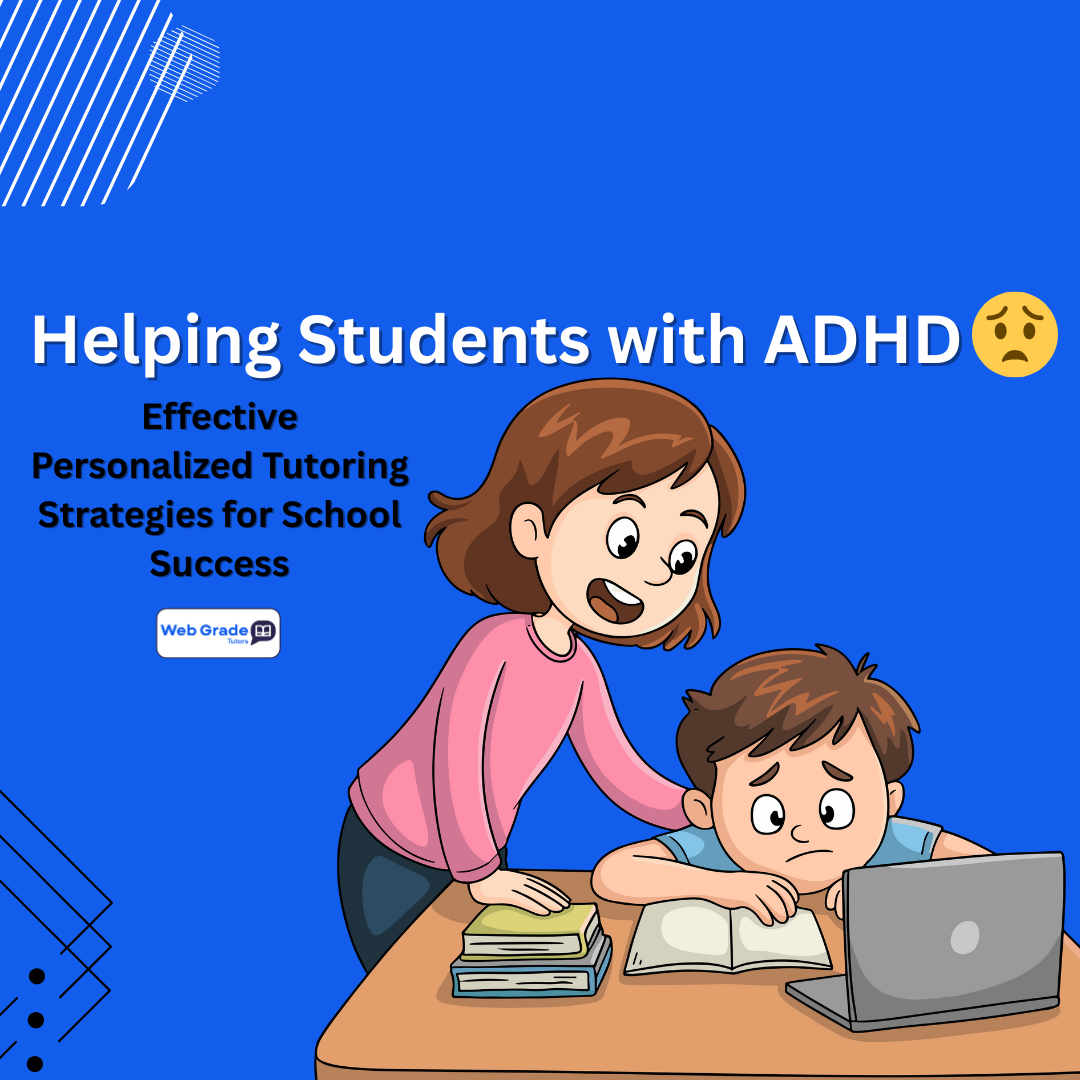
Helping Students with ADHD: Effective Personalized Tutoring Strategies for School Success
Helping Your Childs with Personalized ADHD tutoring
Picture this: It’s a typical school morning, and your 12-year-old is scrambling to find their homework folder again. You’ve reminded them three times about that math assignment, but somehow, it slipped their mind amid the chaos of breakfast and backpack packing. Sound familiar? I’ve been there myself, watching my own kid struggle with focus and organization, feeling that mix of frustration and worry. As a parent who’s navigated this with help from Personalized ADHD tutoring and teachers, I know how overwhelming it can be when ADHD turns school into a daily battle. But here’s the good news: with the right strategies and support, like targeted tutoring, kids with ADHD can not only keep up but actually thrive. In this guide, we’ll dive into helping students with ADHD through practical tips, real stories, and ways to build confidence. By the end, you’ll have actionable steps to make school less stressful and more successful for your child.
Problem Identification For Helping Students With ADHD
Let’s face it, school isn’t always set up for kids who think differently. ADHD, or Attention Deficit Hyperactivity Disorder, affects about 5-7% of children worldwide, according to CDC data, and it shows up in ways that make traditional classrooms tough. Kids might zone out during lessons, forget assignments, or fidget so much they disrupt the class. I’ve seen parents tear up sharing how their bright child gets labeled as “lazy” or “disruptive,” when really, it’s the ADHD wiring at play. Myths don’t help either—like the idea that ADHD is just “bad behavior” or that kids will “grow out of it.” Truth is, without support, these struggles can lead to low self-esteem, falling grades, and even higher dropout risks. In my experience, acknowledging this early is key. Parents often feel guilty, thinking they’re not doing enough, but it’s not about fault; it’s about finding tools that work. For instance, a study from the American Academy of Pediatrics shows that early intervention, like tutoring tailored to ADHD, can improve academic performance by up to 30%. If your child is losing confidence or avoiding homework, you’re not alone. This guide will show how helping students with ADHD starts with validating these challenges and moving toward solutions that rebuild their love for learning.
Why ADHD is a Common Hurdle. From inattention during lectures to impulsivity in group work, ADHD creates barriers that standard teaching methods overlook. Kids might miss instructions because their minds race ahead, or they struggle with time management, leading to incomplete tasks. Socially, it can mean trouble reading cues, making friendships harder. I’ve discovered that these hurdles aren’t about intelligence—many ADHD kids are creative geniuses—but about mismatched environments. Busting the myth that “more discipline” fixes it is crucial; instead, strategies like breaking tasks into chunks help. Real anecdotes, like a parent quote from ADDitude Magazine: “My son went from failing tests to A’s once we addressed his ADHD with structured support.” Data backs this: UK NHS reports show undiagnosed ADHD leads to 2-3 times higher rates of school exclusion. By understanding these pain points—frustration over forgotten homework or fear of falling behind—we can shift to empowering approaches.
Foundation Building with Personlized ADHD Tutoring
Building a strong base is where real change happens for students with ADHD. Think of it like constructing a house: without solid foundations, everything wobbles. In tutoring, this means starting with core skills like focus and organization, using simple analogies to make concepts stick. For example, compare attention to a flashlight—ADHD might make it flicker, but techniques can steady the beam. I’ve found hands-on activities transform abstract ideas into something tangible. Try this 10-minute challenge: Set a timer and have your child sort school supplies into categories (pens, books, notes). It builds categorization skills while showing progress in small wins.
Breaking Down Core Concepts with Analogies. Let’s simplify executive function, often the root issue in ADHD. It’s like the brain’s CEO, handling planning and impulse control. If it’s off, school feels chaotic. Use metaphors: Time management is a puzzle; each task is a piece. Tutors can teach this by drawing mind maps—visual trees branching from “homework” to steps like “read question, write answer.” A real story: One student I know hated math until his tutor compared equations to video game levels, making it fun and less overwhelming. Research from the Child Mind Institute supports this; analogies boost retention by 40% in ADHD kids.
Hands-On Activities to Strengthen Basics with personlized ADHD tutoring. Get active with building blocks for organization—literally. Use colored sticky notes for daily schedules: blue for must-dos, green for breaks. In sessions, practice role-playing: “Pretend you’re in class; what do you do when distracted?” Over 70% of students in a Journal of Attention Disorders study improved focus after such activities. Incorporate movement, like pacing while reciting facts, to channel hyperactivity. Here’s another quick exercise (15 minutes): Create a “focus jar” with slips of paper listing distractions; pull one and brainstorm counters. These build self-awareness, turning struggles into strengths.
Learning Style Differentiation
Every kid learns differently, and for ADHD students, matching styles to strategies is a game-changer. Visual learners might thrive with charts, auditory with discussions, kinesthetic with hands-on builds. In my experience, mixing these keeps engagement high and frustration low.
The Role of Personalized Support in Building Confidence. Personalized tutoring shines here, adapting to how a child processes info. It’s not one-size-fits-all; it’s custom-fit. A success story: A shy 14-year-old with ADHD boosted her grades from C’s to A’s in six weeks through visual aids and short bursts of activity. Stats from Understood.org show over 65% of ADHD students gain confidence with tailored support, reducing anxiety.
Strategies for Visual, Auditory, and Kinesthetic Learners. For visuals, use color-coded notes or apps like MindMeister. Auditory? Record lessons and playback during walks. Kinesthetic: Build models or use fidget tools while studying. I’ve seen a boy who couldn’t sit still excel by jumping rope while memorizing spelling. Try this 5-minute challenge: Identify your child’s style by asking what helps them remember best, then test one strategy.
Real-World Applications For Helping Students with ADHA
Helping students with ADHD management isn’t just for school—it’s life skills. Connecting lessons to careers shows relevance, motivating kids.
Connecting ADHD Management to Everyday Life and Careers. Focus techniques help in jobs like graphic design (creativity shines) or sports coaching (hyperactivity as energy). A parent shared: “My daughter uses her personalized ADHD tutoring strategies at her part-time job, staying organized amid chaos.”
Practical Examples and Scenarios. Imagine planning a family trip: Break it into steps, like ADHD task management. Or in cooking, timing ingredients builds executive function. Real-world tie-ins make abstract skills concrete, per ADDitude resources.
Assessment and Progress
Tracking keeps the momentum going. Use simple tools like weekly checklists to measure wins.
Tools for Tracking Improvement. Apps like Focus@Will or progress journals log focus time and completed tasks. Celebrate small victories to build habits.
Parent Tips for Monitoring at Home. Check in daily with open questions: “What went well today?” Adjust based on feedback, ensuring consistency between home and personalized ADHD tutoring.
WebGrade Tutors Solution
At WebGrade Tutors, we make helping students with ADHD straightforward and effective. Our online platform connects families globally—USA, UK, Canada, Australia, New Zealand, Saudi Arabia, Qatar, UAE—with expert tutors trained in ADHD strategies.
How WebGrade Tutors Makes Learning Accessible for Busy Families. With 24/7 scheduling, sessions fit around sports or work. Affordable plans start low, no long commitments. Tech tools like interactive whiteboards keep kids engaged.
Transformation Stories from Real Students. Take Alex, a 13-year-old from the UK: Struggling with math, he gained confidence in months, improving grades by two levels. Parents rave about the flexibility.
Parent Support Section
You don’t need to be an expert to help—just consistent.
Practical Strategies Parents and Students Can Use Today. Start with routines: Set phone reminders for homework. Use positive reinforcement: Praise effort over perfection.
10-Minute Home Challenge for Building Focus. Gather supplies: Timer, paper, pen. List three tasks, time each in short bursts with breaks. Repeat daily to build stamina.
Conclusion
We’ve covered a lot: From identifying and helping students with ADHD hurdles to building foundations, differentiating styles, and applying skills real world. Remember, progress takes time, but with support, your child can shine.
Key Takeaways and Encouragement. Validate struggles, use personalized ADHD Tutoring strategies, track wins. You’re doing great—keep going.
Ready to Get Started? Book Your Free Trial Today. Ready to see the difference? Book a free, no-obligation trial lesson with a WebGrade Tutors expert today.
Frequently Asked Question?
Common signs include trouble focusing on tasks, forgetting assignments, fidgeting excessively, or interrupting others. These can vary, but if they impact school daily, chat with a doctor.
Tutoring provides one-on-one strategies like task breaking and style matching, boosting focus and confidence. It's more personalized ADHD tutoring than classroom teaching.
Yes, often more so—with interactive tools and no travel stress. WebGrade's platform keeps sessions engaging and flexible.
Things like extra time on tests, quiet spaces, or fidget tools. Work with the school's special needs coordinator.
If struggles persist despite home efforts, affecting grades or happiness, seek a diagnosis. Early help makes a big difference.
It varies, but WebGrade Tutors offers affordable options starting at competitive rates—check our site for details.
Comments are closed